


How to Organize Your Home Office: The Ultimate Guide for a Productive Workspace
A well-organized home office improves focus, boosts productivity, and creates a professional environment. However, clutter and poor organization can quickly reduce efficiency. Therefore, creating a structured workspace is essential for better performance and comfort. Follow these practical strategies to organize your home office and maintain a productive work environment.
Why Home Office Organization Matters
An organized workspace helps you stay focused and complete tasks faster. Moreover, it reduces stress and minimizes distractions throughout the day. A clean office also creates a positive mindset, making work more enjoyable and efficient.
Choose the Right Location
Selecting the right spot is the foundation of a productive home office. Ideally, choose a quiet area with minimal distractions. Additionally, ensure the space has adequate lighting and ventilation.
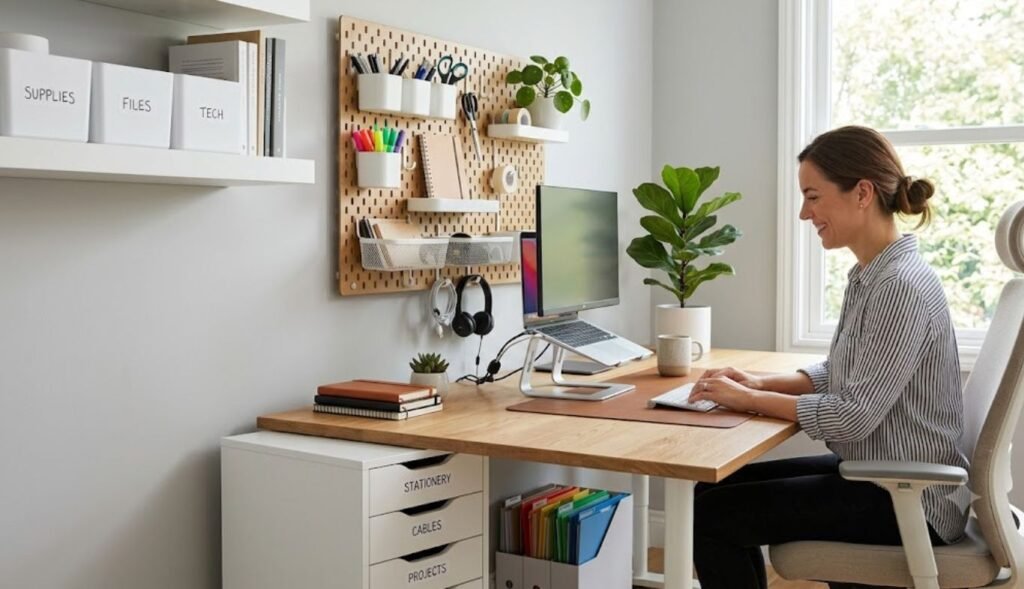
If possible, position your desk near a window. Natural light enhances mood and reduces eye strain. Consequently, you can work longer without feeling fatigued.
Declutter Your Workspace
Clutter often leads to decreased productivity. Therefore, remove unnecessary items from your desk and surrounding area.
Start by sorting your belongings into categories:
- Keep essential items
- Store occasionally used items
- Discard unnecessary materials
As a result, your workspace becomes cleaner and easier to manage.
Invest in Functional Office Furniture
The right furniture improves both comfort and efficiency. Choose a desk that provides enough space for your computer and work materials. Furthermore, invest in an ergonomic chair to support proper posture.
Adjustable furniture offers greater flexibility. Consequently, you can customize your workspace according to your needs.
Create an Efficient Storage System
A well-designed storage system prevents clutter from accumulating. Use filing cabinets, shelves, and storage boxes to organize documents and supplies.
Consider labeling storage containers for quick identification. In addition, group similar items together for easier access. This approach saves time and keeps your office tidy.
Organize Your Desk for Maximum Productivity
Your desk should contain only the items you use daily. Place frequently used tools within arm’s reach. Meanwhile, store less important items elsewhere.
Keep these essentials on your desk:
- Computer or laptop
- Notebook and pens
- Phone charger
- Calendar or planner
By limiting desk items, you create a cleaner and more focused work environment.
Manage Cables and Electronics
Messy cables can make even the cleanest office look disorganized. Therefore, use cable organizers, clips, or sleeves to keep wires under control.
Additionally, position power strips strategically to reduce visible cords. This simple step improves both appearance and safety.
Optimize Digital Organization
Physical organization is important, but digital organization matters equally. Create clearly labeled folders for files and documents. Moreover, back up important data regularly.
Delete unnecessary files and organize your desktop. As a result, you can find information quickly and reduce digital clutter.
Improve Lighting and Comfort
Proper lighting enhances concentration and reduces eye strain. Combine natural light with quality task lighting for the best results.
Furthermore, maintain a comfortable room temperature and consider adding a small plant. Plants improve air quality and create a more pleasant atmosphere.
Establish Daily Organization Habits
Maintaining an organized office requires consistent effort. Spend a few minutes each day returning items to their proper places.
At the end of each workday:
- Clear your desk
- Organize paperwork
- Update your task list
- Prepare for the next day
These habits prevent clutter from building up over time.
Use Productivity Tools and Systems
Productivity tools help keep your work organized. Digital calendars, task managers, and project management platforms streamline daily operations.
Additionally, using a scheduling system helps prioritize tasks effectively. Consequently, you stay organized and meet deadlines more consistently.
Personalize Your Workspace Carefully
Personal touches make your office more inviting. However, avoid excessive decorations that create distractions.
Choose a few meaningful items, such as:
- Family photos
- Motivational artwork
- Small indoor plants
- Professional awards
This balance creates a workspace that feels comfortable yet professional.
Conclusion
Organizing your home office enhances productivity, reduces stress, and creates a more efficient work environment. Start by decluttering your space and investing in functional furniture. Then, establish effective storage systems and maintain daily organization habits. As a result, your home office will support focus, efficiency, and long-term success.