
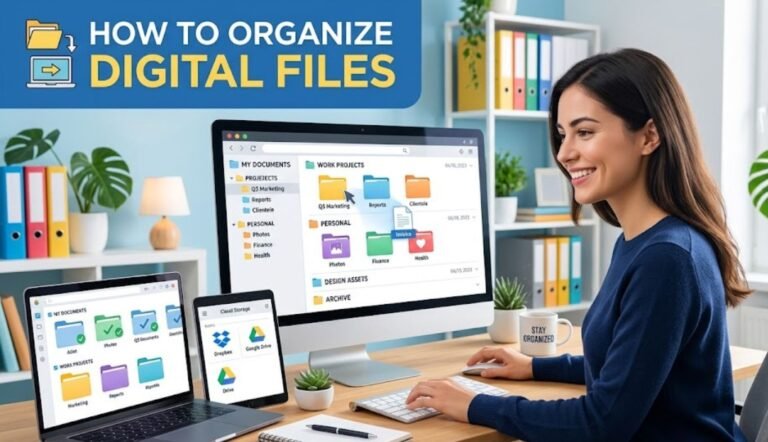
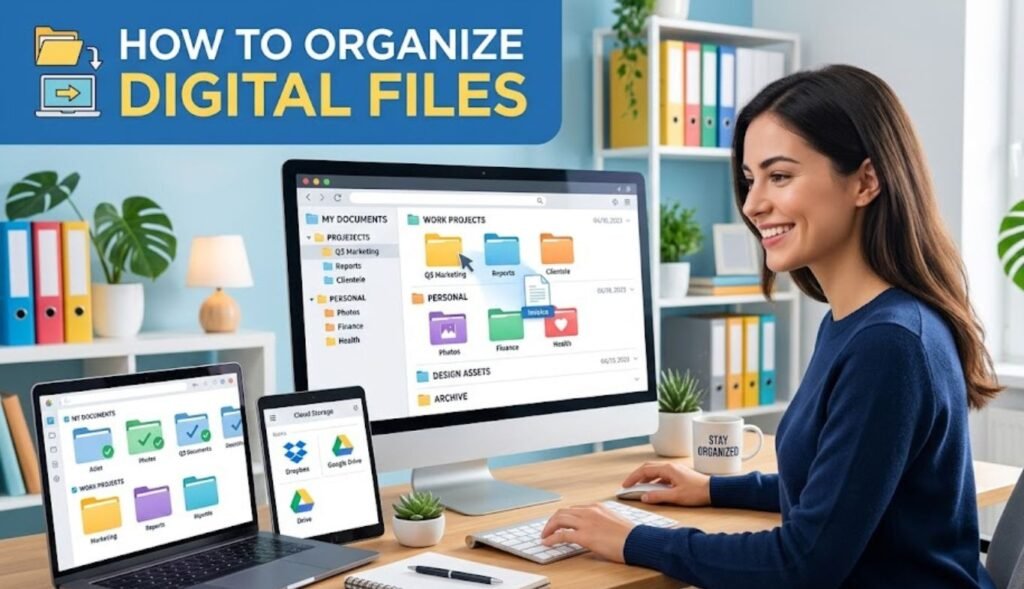
Welcome! In this comprehensive guide, you’ll learn how to organize digital files using simple yet highly effective strategies. Whether you’re organizing personal documents, work files, photos, videos, or cloud storage, this step-by-step guide will help you create a clean, searchable, and future-proof digital filing system.
Digital files have become a major part of our daily lives. From work documents and school assignments to family photos and financial records, almost everything is stored digitally. While technology makes storing information easier than ever, it also creates a new challenge—keeping everything organized.
Learning how to organize digital files is more than simply creating folders. A well-planned filing system saves time, reduces stress, improves productivity, and protects valuable information from being lost.
Many people waste several hours every month searching for misplaced files. An effective organization system eliminates that frustration and helps you find any document within seconds.
This guide walks you through proven methods used by professionals to create an efficient digital filing system that remains organized for years.
Why Digital File Organization Matters
Digital organization affects every part of your workflow. Whether you’re working remotely, running a business, or simply managing personal records, organized files make everyday tasks much easier.
Without a proper system, files quickly become scattered across desktops, downloads folders, cloud storage, USB drives, and external hard drives.
Some common examples include:
- Multiple versions of the same document
- Random file names
- Duplicate photos
- Missing invoices
- Forgotten downloads
- Unorganized screenshots
These small issues eventually become overwhelming.
A structured filing system allows you to:
- Find files quickly
- Improve work efficiency
- Save storage space
- Protect important information
- Reduce digital stress
- Simplify collaboration
Instead of relying on memory, your folder structure becomes a roadmap for every document you own.
The Hidden Cost of Digital Clutter
Digital clutter often goes unnoticed until an important file cannot be found.
Imagine needing a tax document, legal contract, or client presentation just minutes before a deadline. Searching through thousands of poorly named files creates unnecessary pressure.
Digital clutter can also lead to:
| Problem | Impact |
|---|---|
| Lost documents | Missed deadlines |
| Duplicate files | Wasted storage |
| Poor naming | Confusion |
| Disorganized folders | Reduced productivity |
| No backups | Permanent data loss |
An organized digital workspace minimizes these risks.
Organization Improves Productivity
Professionals often emphasize organization because it directly affects performance.
Instead of spending ten minutes searching for one document several times a day, you can locate it instantly.
Over an entire year, that saved time adds up to dozens of productive hours.
Small improvements create significant long-term benefits.
Common Problems Caused by Digital Clutter
Before creating an organized system, it’s important to understand the challenges caused by poor file management.
Most people don’t intentionally create clutter. Instead, it builds gradually over months or years.
Some of the most common problems include:
Download Folder Overload
The Downloads folder often becomes the default storage location for everything.
PDFs
Software installers
Images
Presentations
Videos
Compressed files
Receipts
Eventually, thousands of unrelated files accumulate.
Cleaning this folder regularly prevents unnecessary clutter.
Duplicate Documents
Saving multiple copies of the same file creates confusion.
Examples include:
- Resume Final
- Resume Final Final
- Resume Updated
- Resume Latest
- Resume Latest New
A clear naming convention eliminates this problem.
Random Folder Structures
Some users organize by year.
Others organize by project.
Some organize by file type.
Others never organize at all.
Mixing different systems makes finding files much harder.
Choose one consistent structure and use it everywhere.
Too Many Files on the Desktop
A cluttered desktop slows productivity.
While keeping shortcuts is helpful, storing hundreds of files directly on the desktop makes navigation difficult.
Think of your desktop as a temporary workspace rather than permanent storage.
Inconsistent File Names
Names like:
Document1
New Document
IMG001
Untitled
Final
provide almost no useful information.
Instead, descriptive names improve searchability.
For example:
2026-Marketing-Budget.xlsx
Employee-Handbook.pdf
Client-Proposal-Acme.pdf
Meeting-Notes-July-2026.docx
These names instantly explain the file’s contents.
Benefits of an Organized File System
Learning how to organize digital files offers advantages that extend beyond simply finding documents faster.
An organized system improves efficiency, security, collaboration, and long-term data management.
Faster Search Times
Modern operating systems include powerful search features.
However, search works best when files have meaningful names and are stored in logical folders.
A well-organized system allows you to locate documents within seconds instead of minutes.
Better Collaboration
When sharing files with coworkers or family members, organization becomes even more important.
Consistent folder structures reduce confusion and ensure everyone knows where documents belong.
For businesses, this leads to smoother teamwork and fewer misplaced files.
Reduced Stress
Digital clutter creates mental clutter.
An organized workspace feels cleaner, more professional, and easier to manage.
Knowing exactly where every important file is stored provides peace of mind.
Improved Security
Sensitive documents such as:
- Tax records
- Medical files
- Legal contracts
- Password backups
- Financial statements
should be stored in secure, clearly labeled folders with appropriate access controls.
Organization makes it easier to protect confidential information.
Easier Backups
Backing up a messy system often results in unnecessary duplicates and wasted storage.
An organized folder structure simplifies backup processes and ensures only essential files are preserved.
Regular backups protect against accidental deletion, hardware failure, ransomware attacks, and device theft.
Long-Term Efficiency
The greatest benefit of digital organization is sustainability.
Rather than repeatedly cleaning up clutter, a structured system keeps everything organized from the beginning.
As new files are created, they naturally fit into your existing folder hierarchy.
This habit saves countless hours over the years and makes managing thousands of digital assets surprisingly simple.
Create a Digital Organization Plan
Before moving files into new folders, take time to create a plan. Jumping straight into organizing without a strategy often leads to more confusion later. A good plan helps you build a filing system that is easy to maintain as your collection of files grows.
Start by reviewing where your files are currently stored. Check your desktop, Downloads folder, Documents folder, external hard drives, USB flash drives, and cloud storage accounts. Make a note of the types of files you have and estimate how much storage they use.
Next, decide how you want to organize everything. Most people find it easiest to group files into broad categories first and then create smaller folders within each category.
A simple structure might look like this:
| Main Folder | Example Subfolders |
|---|---|
| Personal | Identification, Finance, Health |
| Work | Projects, Clients, Reports |
| Education | Assignments, Notes, Certificates |
| Photos | Family, Holidays, Events |
| Videos | Personal, Tutorials, Recordings |
| Downloads | Temporary Files |
Once you’ve created your main categories, moving files becomes much easier. Every new document will already have a logical place to go.
Set Organization Goals
Everyone has different needs, so define clear goals before reorganizing your digital workspace.
Examples include:
- Find files within 30 seconds.
- Reduce duplicate files.
- Free up storage space.
- Keep important documents backed up.
- Maintain a clutter-free desktop.
Having specific goals makes it easier to measure your progress.
Choose the Right Folder Structure
One of the most important steps in learning how to organize digital files is creating a folder structure that is simple, consistent, and scalable.
Avoid making dozens of deeply nested folders. If you have to click through many levels to reach one file, your system may be too complicated.
Instead, create a hierarchy that balances organization with accessibility.
Organize by Category
Many users prefer category-based folders because they are easy to understand.
Example:
Documents
│
├── Personal
├── Finance
├── Health
├── Travel
├── Work
├── Education
└── Reference
This structure works well for both individuals and small businesses.
Organize by Year
If you work with ongoing projects or financial records, organizing by year can simplify archiving.
Example:
Taxes
│
├── 2024
├── 2025
└── 2026
This method makes older files easy to locate without cluttering current folders.
Organize by Project
Professionals often organize files according to projects.
Example:
Marketing
│
├── Website Redesign
├── Email Campaign
├── Social Media
└── Reports
This approach keeps related documents together, making collaboration easier.
Avoid Overcomplicated Folder Systems
A common mistake is creating too many folders.
For example:
Documents
→ Personal
→ Bills
→ Electricity
→ Paid
→ January
→ Week 1
This level of detail usually slows you down.
Instead, keep folder structures simple enough that you can remember them without thinking.
Develop a Consistent File Naming Convention
Even the best folder system won’t help if files have confusing names.
Consistent file naming improves search results, sorting, and collaboration.
A good filename should clearly describe the contents without being unnecessarily long.
Use Descriptive Names
Instead of:
- File1
- Notes
- Final
- New Document
Use names like:
- Employee-Handbook-2026.pdf
- Marketing-Plan-Q3.docx
- Family-Budget-2026.xlsx
- Project-Proposal-ABC.pdf
Descriptive names eliminate guesswork.
Include Dates
Dates help organize files chronologically.
The recommended format is:
YYYY-MM-DD
Examples:
- 2026-08-05-Meeting-Notes.docx
- 2026-Annual-Budget.xlsx
- 2026-Tax-Return.pdf
This format also sorts correctly in most operating systems.
Avoid Special Characters
Characters such as:
/
\
?
*
:
<
>
|
"
can cause compatibility issues.
Stick to:
- Letters
- Numbers
- Hyphens
- Underscores
This ensures files work across different devices and operating systems.
Keep File Names Consistent
Choose one naming style and use it everywhere.
For example:
Project-Client-Dateor
Date-Project-VersionConsistency is more important than the exact format you choose.
Organize Files by Category
Grouping files into logical categories is the foundation of an efficient filing system.
Some useful categories include:
Personal
- Identification
- Insurance
- Medical records
- Legal documents
Financial
- Taxes
- Bank statements
- Receipts
- Investments
Work
- Clients
- Contracts
- Presentations
- Reports
Education
- Assignments
- Notes
- Research
- Certificates
Media
- Photos
- Videos
- Music
- Graphics
Keeping related files together reduces search time and makes future maintenance easier.
Archive Older Files
Not every file needs to remain in your active folders.
Move completed projects into an archive.
Example:
Archive
│
├── 2023
├── 2024
├── 2025
└── 2026
Archiving keeps your primary workspace clean while preserving important records.
Manage Documents Efficiently
Documents are often the largest part of any digital filing system. Managing them properly saves time and reduces frustration.
Sort by Purpose
Create folders based on how you use documents.
Examples:
- Contracts
- Invoices
- Receipts
- Reports
- Manuals
- Templates
This approach is often more practical than organizing only by file type.
Convert Paper Records
Many important documents still exist only on paper.
Scan these records into searchable PDF files and store them in clearly labeled folders.
Examples include:
- Birth certificates
- Property records
- Insurance policies
- Warranties
Digital copies are easier to back up and retrieve when needed.
Review Files Regularly
Set aside time every month to review your documents.
During each review:
- Delete unnecessary files.
- Rename poorly labeled documents.
- Move misplaced files.
- Archive completed work.
- Check backup status.
Regular maintenance prevents clutter from building up again.
Organize Photos and Videos
Photos and videos can quickly consume storage if they are not organized.
Instead of leaving everything in one folder, create a structure that reflects dates, events, or subjects.
Example:
Photos
│
├── Family
├── Vacations
├── Birthdays
├── Weddings
└── Nature
For videos:
Videos
│
├── Personal
├── Work
├── Tutorials
└── Events
This system makes it much easier to revisit important memories or locate media for a project.
Delete Unnecessary Media
It’s common to keep multiple versions of the same image or video.
Regularly remove:
- Blurry photos
- Accidental screenshots
- Duplicate images
- Unwanted downloads
- Test videos
Cleaning your media library saves storage space and keeps your collection meaningful.
Keep Your Desktop Clean
Your desktop should serve as a temporary workspace rather than permanent storage.
Limit desktop items to:
- Frequently used shortcuts
- Active project folders
- Temporary files that will soon be moved
Everything else should be stored in its proper folder.
A clean desktop not only looks better but also helps you stay focused and productive.
Use Cloud Storage Wisely
Cloud storage has changed the way we store and access files. Instead of keeping everything on a single computer, you can securely access your documents, photos, and projects from almost any device with an internet connection. However, cloud storage works best when it follows the same organization principles as your local folders.
Begin by creating a clear folder structure in your cloud account. Avoid dumping every file into the main directory. Mirror the same categories you use on your computer so that your filing system remains consistent.
Some helpful tips include:
- Create folders before uploading files.
- Keep file names consistent.
- Archive completed projects.
- Remove outdated documents regularly.
- Share only the folders that others need to access.
A well-organized cloud storage system makes collaboration easier and reduces the chance of accidentally deleting or overwriting important files.
Sync Only What You Need
Many cloud services allow you to choose which folders sync to each device.
If your computer has limited storage, synchronize only your active folders while leaving archived files available online. This approach improves device performance and keeps storage usage under control.
Protect Sensitive Information
Cloud storage is convenient, but security should always be a priority.
For confidential files:
- Use strong, unique passwords.
- Enable two-factor authentication (2FA).
- Review sharing permissions regularly.
- Encrypt highly sensitive documents before uploading them.
These practices help protect personal and business information from unauthorized access.
Back Up Important Files
One of the biggest mistakes people make is assuming that file organization alone prevents data loss. While organization makes files easier to manage, backups ensure they can be recovered if something goes wrong.
A hard drive can fail without warning. A laptop can be stolen, damaged, or infected with malware. Regular backups protect you from these situations.
Follow the 3-2-1 Backup Rule
A widely recommended strategy is the 3-2-1 backup rule:
| Rule | Description |
|---|---|
| 3 Copies | Keep three copies of your important files. |
| 2 Media Types | Store them on two different storage devices. |
| 1 Off-Site Copy | Keep one copy in cloud storage or another secure location. |
Following this method significantly reduces the risk of permanent data loss.
Automate Your Backups
Manual backups are easy to forget. Schedule automatic backups whenever possible.
You can back up:
- Documents
- Photos
- Videos
- Financial records
- Work projects
- School assignments
Automation saves time and ensures your newest files are always protected.
Remove Duplicate Files
Duplicate files waste storage space and make it difficult to determine which version is the most recent.
Common sources of duplicates include:
- Multiple downloads of the same file
- Repeated photo imports
- Edited copies with different names
- Backup folders created manually
Review your storage periodically and remove unnecessary copies.
Keep Only the Latest Version
When working on documents, maintain one primary version whenever possible.
Instead of creating files such as:
- Proposal-Final
- Proposal-Final2
- Proposal-Revised
- Proposal-Latest
Use version numbers or dates if multiple revisions must be retained.
Example:
- Proposal-v1.docx
- Proposal-v2.docx
- Proposal-v3.docx
This naming method is clear and easy to follow.
Maintain Your Digital Filing System
Learning how to organize digital files is only the first step. Maintaining your system is what keeps it effective over time.
Set aside a few minutes each week or month for digital housekeeping.
Create a Maintenance Routine
A simple routine might include:
- Empty the Downloads folder.
- Move files from the Desktop to permanent folders.
- Delete unnecessary screenshots.
- Rename poorly labeled documents.
- Archive completed projects.
- Confirm backups completed successfully.
Small, regular tasks prevent clutter from becoming overwhelming.
Review Storage Usage
Monitor how much storage your devices and cloud accounts are using.
Large video files, duplicate photos, and outdated downloads often consume more space than expected.
Review storage every few months and remove anything you no longer need.
Update Folder Structures When Necessary
As your work or personal life changes, your filing system should evolve too.
You might add new folders for:
- New clients
- Business ventures
- Academic courses
- Family events
- Financial records
Keep the structure simple while adapting it to your current needs.
Best Tools for Digital File Organization
The right tools can make organizing digital files faster and easier.
| Tool Type | Purpose |
|---|---|
| File Explorer/Finder | Browse and manage folders |
| Cloud Storage | Sync and access files across devices |
| PDF Management Software | Organize and edit PDF documents |
| Duplicate File Finder | Identify and remove duplicate files |
| Backup Software | Schedule automatic backups |
| Password Manager | Secure login credentials |
Remember that tools are only as effective as the organization system behind them. Consistency and good habits remain the most important factors.
Best Practices for Long-Term Success
To keep your digital filing system efficient:
- Use meaningful file names.
- Create folders before saving files.
- Avoid storing everything on your desktop.
- Archive inactive projects.
- Back up important information regularly.
- Review and clean your files every month.
- Delete duplicate or unnecessary files.
- Keep your folder structure simple and logical.
By following these practices, you’ll spend less time searching for documents and more time focusing on meaningful work.
Frequently Asked Questions (FAQs)
1. What is the best way to organize digital files?
The best approach is to create a simple folder hierarchy, use consistent file names, organize by category or project, and back up important files regularly.
2. How often should I organize my digital files?
A monthly review is recommended. Weekly maintenance for active files and folders can prevent clutter from building up.
3. Should I organize files by date or by category?
It depends on your workflow. Most users benefit from organizing by category first and then using dates within those folders.
4. What should I do with old files?
Archive files that you no longer use but may need in the future. Delete only those files that are no longer valuable or required.
5. Is cloud storage enough for backups?
No. Cloud storage is helpful, but following the 3-2-1 backup rule provides better protection against accidental deletion, hardware failure, and cyber threats.
6. How can I reduce duplicate files?
Use a consistent naming convention, avoid downloading the same file multiple times, and review your storage regularly to remove unnecessary copies.
7. Why is file naming important?
Clear file names improve searchability, reduce confusion, and make collaboration easier. Including descriptive titles and dates helps you identify files at a glance.
Conclusion
Knowing how to organize digital files is an essential skill in today’s digital world. Whether you manage personal documents, business records, academic materials, or creative projects, a structured filing system saves time, reduces stress, and protects valuable information.
Start with a simple folder structure, create meaningful file names, organize files into logical categories, and maintain your system with regular reviews. Combine these habits with reliable backups and secure cloud storage to ensure your digital information remains safe and accessible.
The goal isn’t to create a perfect system overnight. Instead, build a practical structure that fits your needs and improve it over time. With consistency and a few minutes of maintenance each month, you’ll enjoy a cleaner digital workspace and a more productive workflow for years to come.