



Comprehensive Outline
| Heading Level | Topic |
|---|---|
| H1 | How to Clean White Shoes: Ultimate 15-Step Guide to Keep Them Spotless |
| H2 | Why White Shoes Get Dirty So Quickly |
| H2 | Things You’ll Need Before You Start Cleaning |
| H2 | Identify the Material of Your White Shoes |
| H3 | Canvas Shoes |
| H3 | Leather Shoes |
| H3 | Mesh Shoes |
| H3 | Suede Shoes |
| H2 | How to Clean White Canvas Shoes |
| H2 | How to Clean White Leather Shoes |
| H2 | How to Clean White Mesh Shoes |
| H2 | How to Clean White Suede Shoes |
| H2 | How to Whiten Yellow Shoe Soles |
| H2 | Natural DIY Cleaning Solutions |
| H2 | Common Mistakes to Avoid |
| H2 | How to Protect White Shoes After Cleaning |
| H2 | Best Commercial Shoe Cleaners |
| H2 | Frequently Asked Questions |
| H2 | Conclusion |
How to Clean White Shoes: Ultimate 15-Step Guide to Keep Them Spotless
White shoes never go out of style. Whether you wear classic sneakers, athletic shoes, leather trainers, or fashionable canvas footwear, their clean appearance instantly upgrades your outfit. Unfortunately, white shoes also attract dirt, mud, grass stains, dust, and yellow marks faster than any other color.
Learning how to clean white shoes correctly can save money, extend the life of your footwear, and keep your favorite pair looking almost new. The good news is that you don’t need expensive equipment. Most shoes can be restored with common household items like baking soda, dish soap, vinegar, or a quality shoe cleaner.
This comprehensive guide explains the safest cleaning methods for every shoe material, effective stain removal techniques, preventive maintenance tips, and professional recommendations that actually work.
Why White Shoes Get Dirty So Quickly
White footwear highlights every speck of dust because of its bright surface. Everyday walking exposes shoes to dirt, oils, moisture, and environmental pollutants that gradually build up.
Several factors make white shoes especially vulnerable:
- Road dust settles into fabric fibers.
- Rainwater leaves mineral stains.
- Mud penetrates textured materials.
- Sweat creates yellow discoloration.
- Grass stains contain natural pigments.
- Oils from your hands transfer onto leather.
- Sunlight can cause oxidation and yellowing.
Even high-quality shoes require regular cleaning if you wear them frequently.
Fortunately, routine maintenance prevents permanent stains and significantly extends the lifespan of your shoes.
Things You’ll Need Before You Start Cleaning
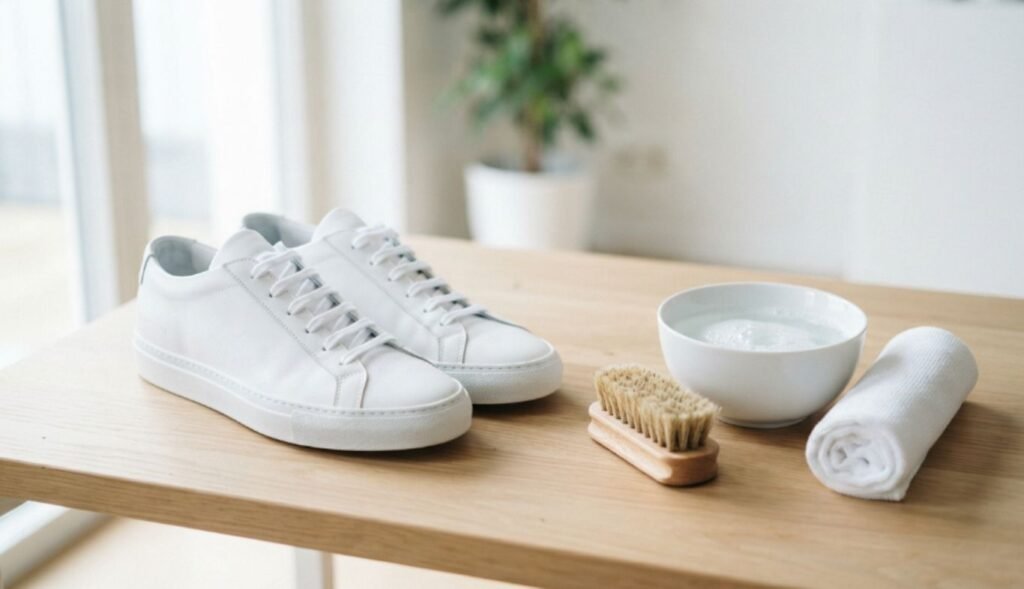
Preparing the right supplies makes cleaning faster and safer.
| Cleaning Item | Purpose |
|---|---|
| Soft brush | Removes loose dirt |
| Microfiber cloth | Wipes surfaces gently |
| Soft toothbrush | Cleans stitching and edges |
| Mild dish soap | General cleaning |
| Baking soda | Removes stains and odors |
| White vinegar | Breaks down dirt naturally |
| Warm water | Safe cleaning solution |
| Magic eraser | Cleans rubber soles |
| Shoe cleaning sponge | Gentle scrubbing |
| Dry towel | Absorbs moisture |
Optional supplies include:
- Shoe trees
- Laundry bag
- Leather conditioner
- Protective waterproof spray
- Sneaker cleaning kit
Using soft tools instead of stiff brushes reduces the chance of damaging delicate materials.
Identify the Material of Your White Shoes
Before cleaning, determine what material your shoes are made from. Different materials require different techniques.
Canvas Shoes
Canvas sneakers are durable and respond well to baking soda, detergent, and warm water.
These shoes absorb stains quickly but are generally the easiest to restore.
Leather Shoes
Leather requires gentle cleaning with minimal water.
Too much moisture can dry out the leather, causing cracks and discoloration.
Always finish with a leather conditioner after cleaning.
Mesh Shoes
Mesh running shoes allow airflow but trap dirt deep inside tiny fibers.
Aggressive scrubbing may damage the woven fabric.
A gentle brush and mild soap work best.
Suede Shoes
Suede demands extra care.
Never soak suede in water.
Instead, use a suede brush and specialized suede cleaner to lift stains without ruining the texture.
How to Clean White Canvas Shoes
Canvas shoes are among the easiest white shoes to restore because they tolerate gentle scrubbing and natural cleaning solutions.
Step 1: Remove the Laces
Take the shoelaces out first.
Wash them separately using warm water and detergent.
If they’re badly stained, soak them for 30 minutes with baking soda before rinsing.
Step 2: Brush Away Loose Dirt
Use a dry brush to remove mud, dust, and sand.
Never begin with water because wet dirt can spread deeper into the fabric.
Brush every corner carefully, including the tongue and stitching.
Step 3: Prepare a Cleaning Paste
Mix:
- 2 tablespoons baking soda
- 1 tablespoon warm water
- 1 tablespoon white vinegar
This mixture creates a gentle foaming paste that lifts stubborn stains naturally.
Step 4: Scrub Gently
Apply the paste using a soft toothbrush.
Work in small circular motions.
Focus on stained areas without applying excessive pressure.
Allow the paste to sit for 20 minutes.
Step 5: Rinse Carefully
Use a damp microfiber cloth to remove the paste.
Avoid soaking the shoes completely.
Repeat the cleaning process if necessary.
Step 6: Air Dry Properly
Stuff the shoes with paper towels.
This helps maintain their shape while absorbing excess moisture.
Never place canvas shoes in direct sunlight or a clothes dryer because excessive heat may cause shrinking.
How to Clean White Leather Shoes
Leather shoes require a more delicate approach than canvas footwear.
Using harsh chemicals or soaking them in water can strip away the natural oils that keep leather soft and flexible.
Remove Surface Dirt
Start by wiping the shoes with a dry microfiber cloth.
Next, use a soft brush to remove dirt from seams and textured areas.
This prevents scratching during cleaning.
Prepare a Mild Cleaning Solution
Mix a few drops of mild dish soap with warm water.
Dip a microfiber cloth into the solution and wring out the excess water.
The cloth should be damp—not soaking wet.
Wipe the Leather
Clean the shoe using gentle circular motions.
Pay extra attention to dirty spots around the toe box and heel.
Avoid saturating the leather.
Clean the Rubber Soles
A damp magic eraser works well for removing black scuff marks from white rubber soles.
Use light pressure to avoid wearing away the finish.
Dry and Condition
Wipe away any remaining moisture using a dry towel.
After the shoes are fully dry, apply a leather conditioner.
Conditioning restores moisture and helps prevent cracking over time.
How to Clean White Mesh Shoes
Mesh shoes are lightweight and breathable, making them popular for running, walking, and everyday wear. However, their woven fabric easily traps dirt, dust, and sweat.
Cleaning mesh requires patience because vigorous scrubbing can stretch or damage the fibers.
Remove Loose Debris
Use a soft-bristled brush to gently loosen dirt from the mesh.
Brush in one direction rather than scrubbing aggressively.
Mix a Gentle Soap Solution
Combine warm water with a small amount of mild laundry detergent or dish soap.
Avoid bleach, as it can weaken synthetic fibers and cause discoloration.
Clean with a Soft Brush
Dip a toothbrush into the cleaning solution and gently scrub the mesh.
Work in small sections until the dirt begins to lift.
Remove Soap Residue
Use a damp microfiber cloth to wipe away any remaining soap.
Repeat as needed until the shoes look clean.
Air Dry Naturally
Place the shoes in a cool, well-ventilated area.
Stuff them with paper towels to absorb moisture and help them keep their shape.
How to Clean White Suede Shoes
White suede shoes offer a luxurious look, but they require extra care. Unlike canvas or leather, suede has a soft, textured surface that can easily become damaged if exposed to too much water. Learning how to clean white shoes made of suede properly will help preserve their appearance and extend their lifespan.
Brush Away Dry Dirt
Begin by using a suede brush to remove loose dirt and dust. Always brush in the same direction to maintain the suede’s natural texture. If you don’t have a suede brush, a clean, soft toothbrush can work in a pinch.
Remove Scuff Marks
Light scuffs can often be erased with a suede eraser. Gently rub the affected area without pressing too hard. For stubborn marks, use short, controlled strokes with your suede brush.
Treat Stains Carefully
Mix a small amount of white vinegar with water and lightly dampen a microfiber cloth. Gently dab the stain rather than rubbing it. Allow the suede to dry naturally before brushing it again to restore the nap.
Restore the Texture
Once completely dry, brush the suede one final time to revive its soft finish. If the shoes become flattened after cleaning, a suede brush will help restore their original appearance.
Pro Tip: Never place suede shoes in a washing machine or soak them in water. Excess moisture can permanently damage the material.
How to Whiten Yellow Shoe Soles
One of the most common problems with white sneakers is yellowing rubber soles. This discoloration usually occurs because of oxidation, sunlight exposure, and dirt buildup.
Fortunately, there are several effective methods to restore their bright white appearance.
Method 1: Baking Soda and Hydrogen Peroxide
Mix:
- 1 tablespoon baking soda
- 1 tablespoon hydrogen peroxide
- 1 tablespoon warm water
Apply the paste evenly to the yellowed soles using an old toothbrush. Let it sit for 30 to 45 minutes before rinsing thoroughly.
Method 2: Magic Eraser
A melamine foam sponge, commonly known as a magic eraser, works exceptionally well for removing surface stains from rubber midsoles.
Simply dampen the sponge and gently rub the affected areas until the stains disappear.
Method 3: Whitening Toothpaste
Non-gel white toothpaste contains mild abrasives that can brighten rubber soles.
Apply a small amount with a toothbrush, scrub gently, and wipe clean using a damp cloth.
Method 4: Commercial Sole Whitener
If home remedies don’t produce the desired results, consider using a professional sneaker sole whitening product designed specifically for rubber.
Natural DIY Cleaning Solutions
Many people prefer natural cleaning products because they’re inexpensive, environmentally friendly, and safe for most shoe materials.
Baking Soda Paste
Baking soda remains one of the best natural cleaners for white shoes.
It helps remove:
- Dirt
- Sweat stains
- Odors
- Light discoloration
White Vinegar Solution
White vinegar breaks down grime without leaving harsh chemical residues.
Mix equal parts vinegar and water for a gentle all-purpose cleaner suitable for canvas and mesh shoes.
Dish Soap Mixture
A few drops of mild dish soap mixed with warm water create an excellent cleaning solution for everyday maintenance.
Lemon Juice
Fresh lemon juice contains natural acids that help brighten white surfaces.
Use it sparingly and avoid prolonged exposure to direct sunlight after application.
Cornstarch for Oil Stains
Oil stains can be difficult to remove.
Sprinkle cornstarch over the stain and let it sit overnight. It absorbs excess oil before brushing it away the following day.
Common Mistakes to Avoid
Even the best cleaning products can cause damage if used incorrectly. Avoid these common mistakes to protect your shoes.
Using Too Much Water
Excessive water can weaken adhesives, deform shoes, and encourage mold growth.
Instead, use a damp cloth rather than soaking your footwear.
Using Bleach Incorrectly
Although bleach may seem like an obvious solution, concentrated bleach can cause yellowing and fabric deterioration.
Always dilute bleach properly or choose safer alternatives.
Drying Shoes with Direct Heat
Hair dryers, radiators, and clothes dryers may cause shoes to shrink or crack.
Air drying in a shaded, well-ventilated area remains the safest option.
Scrubbing Too Aggressively
Heavy scrubbing may damage mesh fabrics, remove protective coatings, or scratch leather.
Gentle cleaning delivers better long-term results.
Ignoring Regular Maintenance
Waiting until shoes become heavily stained makes cleaning much more difficult.
Cleaning your shoes every few weeks prevents stubborn dirt buildup.
How to Protect White Shoes After Cleaning
Once you’ve learned how to clean white shoes, it’s equally important to keep them clean for as long as possible.
Apply a Protective Spray
Waterproof and stain-resistant sprays create an invisible barrier against moisture and dirt.
Reapply every few weeks for maximum protection.
Store Shoes Properly
Keep white shoes in a cool, dry location away from direct sunlight.
Dust bags or original shoe boxes help minimize exposure to dirt.
Rotate Your Footwear
Avoid wearing the same pair every day.
Giving shoes time to air out helps reduce odors and extends their lifespan.
Clean Minor Stains Immediately
Fresh stains are much easier to remove than old ones.
A quick wipe after each wear can prevent permanent discoloration.
Replace Worn Laces
Bright white shoelaces dramatically improve the overall appearance of your sneakers.
Wash or replace dirty laces regularly.
Best Commercial Shoe Cleaners
While household products are effective, professional cleaners often provide faster and more consistent results.
| Product Type | Best For | Key Benefit |
|---|---|---|
| Sneaker Cleaning Kit | All-purpose cleaning | Includes brush and solution |
| Foam Cleaner | Leather and canvas | Quick application |
| Sole Cleaner | Rubber soles | Removes yellow stains |
| Leather Conditioner | Leather shoes | Prevents cracking |
| Suede Cleaner | Suede footwear | Protects delicate fibers |
| Waterproof Spray | All materials | Repels dirt and water |
When selecting a cleaner, always check that it is compatible with your shoe material before use.
Expert Tips for Long-Lasting White Shoes
Professional shoe care isn’t just about cleaning—it also involves prevention.
Here are several expert recommendations:
- Remove surface dust after every wear.
- Use shoe trees to maintain shape.
- Never store damp shoes.
- Clean stains as soon as they appear.
- Wash shoelaces separately.
- Avoid muddy paths whenever possible.
- Rotate between multiple pairs of shoes.
- Apply a protective spray every few weeks.
- Use gentle brushes designed for footwear.
- Follow the manufacturer’s care instructions.
Developing these simple habits can significantly extend the life of your favorite white shoes while keeping them looking fresh.
Frequently Asked Questions
1. What is the best way to clean white shoes at home?
The best way to clean white shoes depends on the material. For canvas shoes, a mixture of baking soda, white vinegar, and warm water works well. Leather shoes should be cleaned with a mild soap solution and a soft microfiber cloth, while mesh shoes require gentle brushing with diluted detergent. Suede shoes need a suede brush and specialized cleaner to avoid damaging the delicate fibers.
2. Can I wash white shoes in the washing machine?
Some canvas and fabric shoes are machine washable, but you should always check the manufacturer’s care instructions first. Remove the laces and insoles, place the shoes in a laundry bag, and use a gentle cycle with cold water. Avoid machine washing leather or suede shoes because excess water and agitation can cause permanent damage.
3. How do I remove yellow stains from white shoes?
Yellow stains are commonly caused by oxidation, sweat, or improper drying. You can remove them using a paste made from baking soda and hydrogen peroxide or by using a sneaker sole whitener designed for rubber. Always allow shoes to air dry in a shaded area to reduce future yellowing.
4. Is bleach safe for cleaning white shoes?
Bleach should be used with caution. Undiluted bleach can weaken fabric fibers, damage leather, and even cause yellow discoloration over time. If you choose to use bleach, dilute it according to the product instructions and test it on a small hidden area first. In many cases, baking soda and mild detergent provide safer alternatives.
5. How often should I clean my white shoes?
For shoes worn regularly, a light cleaning once every one to two weeks helps prevent dirt buildup. Deep cleaning every one to two months keeps them looking their best. Wiping away fresh stains immediately also reduces the need for intensive cleaning later.
6. How can I prevent white shoes from getting dirty?
Preventive care is the easiest way to maintain white footwear. Apply a waterproof or stain-resistant spray, avoid muddy areas when possible, clean minor stains as soon as they appear, and store shoes in a cool, dry place away from direct sunlight. Rotating between multiple pairs also reduces daily wear.
7. Can toothpaste really clean white shoes?
Yes. Non-gel white toothpaste contains mild abrasives that can help remove light stains and brighten rubber soles. Apply a small amount with a soft toothbrush, scrub gently, and wipe away the residue with a damp cloth. However, toothpaste is most effective for minor discoloration rather than deep stains.
Final Shoe Care Tips
Keeping white shoes spotless doesn’t require expensive products or professional services. Consistent maintenance, prompt stain removal, and proper storage make the biggest difference.
Remember these key practices:
| Tip | Benefit |
|---|---|
| Clean dirt immediately | Prevents permanent stains |
| Use the correct cleaner | Protects shoe material |
| Air dry naturally | Prevents shrinking and cracking |
| Store in a cool, dry place | Reduces discoloration |
| Apply a protective spray | Repels water and dirt |
| Clean laces separately | Improves overall appearance |
| Rotate shoes regularly | Extends shoe life |
Following these habits will help your white shoes stay cleaner for longer and reduce the need for heavy scrubbing.
Recommended External Resource
For additional footwear care tips and manufacturer-specific guidance, visit the official shoe care information provided by your shoe brand or explore general cleaning advice from trusted household resources such as Good Housekeeping.
Conclusion
Knowing how to clean white shoes is an essential skill for anyone who wants their footwear to look fresh, stylish, and well cared for. Whether your shoes are made from canvas, leather, mesh, or suede, using the right cleaning method protects the material while removing dirt, stains, and discoloration effectively.
Regular maintenance is just as important as deep cleaning. Brushing away dust after each use, treating stains immediately, and applying a protective spray can dramatically extend the life of your shoes. Small habits like storing footwear properly and rotating between pairs also help preserve their bright appearance.
By following the techniques outlined in this guide, you can confidently restore white shoes to their best condition using simple household ingredients or trusted commercial products. With a little routine care, your favorite sneakers and casual shoes can continue looking clean, comfortable, and ready for any occasion.