


Introduction
If you’ve ever wanted to create professional-looking graphics, product photos, social media posts, or marketing materials, learning how to remove background from image is an essential skill. Thanks to modern AI-powered tools, removing a background no longer requires advanced graphic design knowledge or expensive software.
Whether you’re a blogger, eCommerce seller, marketer, student, or content creator, background removal can instantly improve the quality of your images. Clean images help products stand out, make presentations look polished, and allow you to place subjects onto new backgrounds with ease.
The best part? Many excellent tools allow you to remove backgrounds in just a few seconds.
Comprehensive Outline
| Heading Level | Topic |
|---|---|
| H1 | How to Remove Background from Image: 10 Powerful & Easy Methods for Perfect Results |
| H2 | Introduction |
| H2 | Why Background Removal Matters |
| H2 | Understanding Image Background Removal |
| H3 | Manual vs AI Background Removal |
| H3 | Common Image Formats |
| H2 | Best Ways to Remove Background from Image |
| H3 | Using AI Tools |
| H3 | Using Online Editors |
| H3 | Using Desktop Software |
| H3 | Using Mobile Apps |
| H2 | Step-by-Step Guide |
| H3 | Method 1 |
| H3 | Method 2 |
| H3 | Method 3 |
| H2 | Best Practices |
| H2 | Common Mistakes |
| H2 | Advanced Techniques |
| H2 | Frequently Asked Questions |
| H2 | Conclusion |
How to Remove Background from Image
In this comprehensive guide, you’ll discover:
- What background removal is
- Why it’s important
- Different methods available
- The best free and premium tools
- Professional tips for perfect cutouts
- Common mistakes to avoid
By the end of this guide, you’ll know exactly how to remove background from image efficiently while maintaining excellent image quality.
Why Background Removal Matters
Removing an image background isn’t just about aesthetics—it serves many practical purposes across different industries.
Better Product Photography
Online shoppers often make buying decisions based on product images. Transparent or white backgrounds make products look cleaner and more professional.
Benefits include:
- Higher conversion rates
- Better marketplace compliance
- Improved customer trust
- Cleaner catalogs
Professional Marketing Materials
Marketers frequently remove backgrounds to create:
- Advertisements
- Flyers
- Social media graphics
- Website banners
- Email campaigns
A clean cutout allows greater flexibility in design.
Social Media Content
Eye-catching visuals attract more engagement.
Removing distracting backgrounds helps emphasize:
- People
- Products
- Logos
- Promotional offers
This creates more impactful posts on platforms like Instagram, Facebook, Pinterest, and LinkedIn.
Graphic Design Projects
Designers regularly remove backgrounds when creating:
- Posters
- Brochures
- Infographics
- Business cards
- Presentations
Transparent images integrate seamlessly into different layouts.
Understanding Image Background Removal
Before choosing a tool, it’s important to understand what background removal actually involves.
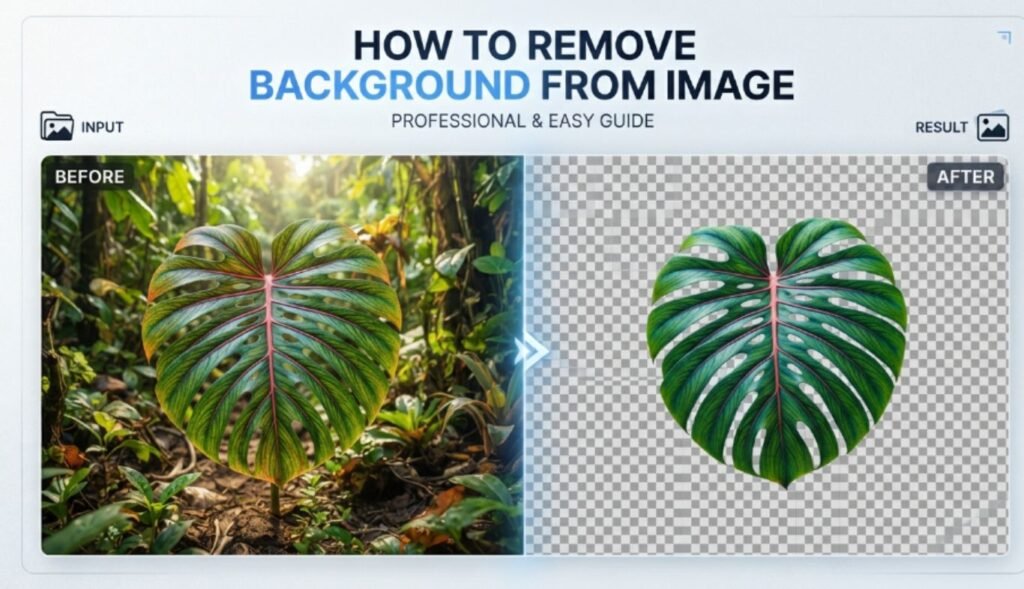
Background removal separates the main subject from everything behind it. The result is usually:
- Transparent PNG
- White background
- Solid-colored background
- Custom background
Modern AI recognizes edges, people, objects, animals, clothing, and even fine details like hair.
Manual vs AI Background Removal
There are two primary approaches.
AI Background Removal
AI tools automatically detect the subject.
Advantages include:
- Extremely fast
- Beginner friendly
- High accuracy
- One-click editing
- Excellent for everyday use
Ideal for:
- Product images
- Portraits
- Social media
- Blogging
Manual Background Removal
Professional editors prefer manual techniques when precision matters.
Advantages include:
- Complete control
- Better edge refinement
- Complex object editing
- Superior quality for commercial projects
However, manual editing requires experience and takes considerably longer.
Common Image Formats
Understanding file formats helps preserve image quality.
| Format | Best Use |
|---|---|
| PNG | Transparent backgrounds |
| JPG | General photography |
| WebP | Websites |
| SVG | Logos and vector graphics |
| TIFF | Professional printing |
PNG is generally the preferred format after removing backgrounds because it supports transparency.
Best Ways to Remove Background from Image
Several methods are available depending on your skill level and needs.
1. AI Background Removers
AI-powered tools have transformed image editing.
They automatically:
- Detect subjects
- Remove backgrounds
- Preserve edges
- Export transparent PNGs
Advantages include:
- One-click operation
- Fast processing
- High-quality output
- No design skills required
2. Online Background Removal Tools
Browser-based editors are convenient because they require no installation.
Typical workflow:
- Upload your image.
- Let the AI detect the subject.
- Preview the result.
- Refine edges if needed.
- Download the edited image.
These tools are perfect for occasional users.
3. Desktop Editing Software
Professional software offers maximum flexibility.
Desktop editors allow users to:
- Fine-tune selections
- Improve hair masking
- Adjust shadows
- Add effects
- Replace backgrounds
Although they require more learning, they deliver outstanding results for commercial work.
4. Mobile Apps
Smartphone apps now provide surprisingly accurate background removal.
They’re especially useful for:
- Social media creators
- Influencers
- Online sellers
- Small business owners
Most apps use AI to complete the task within seconds.
Step-by-Step Guide: How to Remove Background from Image
Follow these simple steps for excellent results.
Step 1: Choose a High-Quality Image
Better images produce better cutouts.
Look for:
- Good lighting
- Sharp focus
- Minimal blur
- Clear subject separation
Step 2: Upload the Image
Open your preferred editing tool.
Upload:
- JPG
- PNG
- WebP
Most services support drag-and-drop uploading.
Step 3: Let AI Process the Image
Within seconds, AI identifies:
- Subject edges
- Hair
- Clothing
- Objects
- Background
Automatic detection significantly reduces editing time.
Step 4: Refine the Edges
Even excellent AI sometimes benefits from small adjustments.
Check:
- Hair
- Fingers
- Glasses
- Jewelry
- Transparent objects
Use the erase and restore tools where available for a cleaner result.
Step 5: Export the Image
Choose the appropriate format:
- PNG for transparent backgrounds
- JPG for white or colored backgrounds
- WebP for optimized web performance
Save the highest resolution available to maintain image quality.
Advanced Techniques for Professional Background Removal
Once you’ve mastered the basics of how to remove background from image, it’s time to improve your editing skills with advanced techniques. These methods help create cleaner, more natural-looking results, especially when working with complex subjects.
1. Refine Hair and Fur Edges
Hair, fur, and feathers are among the most challenging elements to isolate. Instead of relying solely on automatic AI detection, use edge refinement tools available in many advanced editors.
Tips for better results:
- Zoom in while editing.
- Use a soft brush for edge corrections.
- Preserve fine strands instead of erasing them.
- Avoid over-smoothing the edges.
2. Preserve Transparent Objects
Glass, water bottles, sunglasses, and similar objects often confuse automatic background removers.
To improve transparency:
- Reduce brush opacity.
- Restore erased transparent sections manually.
- Compare the edited image with the original before exporting.
3. Add Realistic Shadows
After removing the background, the image can appear to “float.” Adding a subtle shadow helps create depth and realism.
A good shadow should:
- Match the light source.
- Have soft edges.
- Use low opacity.
- Stay proportional to the subject.
4. Replace Backgrounds Creatively
Instead of leaving the background transparent, try replacing it with:
- Solid colors
- Gradient backgrounds
- Office environments
- Nature scenes
- Product showcases
- Branded graphics
This technique is widely used in advertising and social media marketing.
Best Free and Paid Tools to Remove Background from Image
Choosing the right software depends on your experience level, budget, and editing needs.
| Tool Type | Best For | Pros | Cons |
|---|---|---|---|
| AI Online Tools | Beginners | One-click editing | Limited free downloads |
| Professional Desktop Software | Designers | Full control | Learning curve |
| Mobile Apps | Social media creators | Fast editing | Fewer advanced features |
| Browser-Based Editors | Occasional users | No installation | Internet required |
When selecting a tool, consider:
- Image quality
- Export resolution
- Transparency support
- Batch processing
- Ease of use
- Cost
For additional image editing resources, visit https://opensource.com or other trusted educational websites that provide tutorials on digital design and image optimization.
Expert Tips for Better Background Removal
Professionals follow a consistent workflow to produce polished images. Here are some practical tips:
Use High-Resolution Images
The higher the resolution, the more accurately AI can detect edges.
Ensure Good Lighting
Well-lit subjects are easier to separate from the background.
Avoid Busy Backgrounds
Simple backgrounds improve detection accuracy.
Keep Original Files
Always save the original image before editing. This allows you to restart if needed.
Zoom While Editing
Magnifying the image helps you notice missed details around:
- Hair
- Fingers
- Clothing
- Accessories
Export in PNG Format
PNG supports transparent backgrounds, making it ideal for websites, presentations, and graphic design projects.
Common Mistakes to Avoid
Even powerful AI tools can produce imperfect results if the original image isn’t suitable. Avoid these common mistakes.
Using Low-Quality Images
Blurry or pixelated photos make it difficult to detect clean edges.
Ignoring Edge Refinement
Automatic edits aren’t always perfect. Spend a few extra moments refining edges for a professional finish.
Overusing Eraser Tools
Aggressive erasing can remove important details like hair strands or clothing edges.
Choosing the Wrong File Format
Exporting a transparent image as JPG removes transparency. Use PNG whenever transparency is required.
Forgetting to Check the Final Image
Always inspect your edited image at 100% zoom before downloading or publishing it.
Best Practices for Different Use Cases
Product Photography
- Use a pure white or transparent background.
- Maintain consistent lighting.
- Keep product dimensions uniform.
- Export in high resolution.
Social Media Graphics
- Replace backgrounds with colorful designs.
- Add branding elements.
- Use eye-catching layouts.
Business Presentations
- Remove distracting backgrounds.
- Use professional colors.
- Maintain image consistency across slides.
Personal Photos
- Create custom portraits.
- Replace vacation backgrounds.
- Design greeting cards.
- Produce profile pictures with clean backgrounds.
Frequently Asked Questions (FAQs)
1. What is the easiest way to remove a background from an image?
The easiest method is using an AI-powered background removal tool. Simply upload the image, let the software detect the subject, and download the edited version.
2. Can I remove backgrounds for free?
Yes. Many online tools offer free background removal with basic features. Some may limit image resolution or require payment for high-quality downloads.
3. Which image format is best after removing a background?
PNG is the preferred format because it supports transparent backgrounds while preserving image quality.
4. Does background removal reduce image quality?
Not necessarily. If you use a high-quality source image and export at full resolution, image quality can remain excellent.
5. Can AI accurately remove hair from backgrounds?
Modern AI performs very well with hair and fur, but manual touch-ups may still be needed for the most natural-looking results.
6. Is background removal useful for eCommerce?
Absolutely. Clean product images improve professionalism, meet marketplace requirements, and can increase customer trust and sales.
Conclusion
Learning how to remove background from image is a valuable skill for anyone creating digital content. Whether you’re designing marketing materials, enhancing product photos, building presentations, or posting on social media, clean background removal helps your subject stand out and gives your visuals a polished, professional appearance.
Thanks to modern AI technology, even beginners can achieve impressive results in just a few clicks. However, understanding edge refinement, choosing the correct file format, and applying best practices can make the difference between an average edit and a professional-quality image.
Start with high-resolution photos, use reliable editing tools, and always review your final image before publishing. With regular practice, you’ll be able to create clean, eye-catching visuals suitable for personal, educational, and commercial projects.