
Comprehensive Article Outline
| Heading Level | Topic |
|---|---|
| H1 | Best Free Website Builder: The Ultimate 12 Choices for Creating a Stunning Website in 2026 |
| H2 | What Is a Free Website Builder? |
| H2 | Why Free Website Builders Are More Popular Than Ever |
| H2 | How to Choose the Best Free Website Builder |
| H2 | Essential Features Every Website Builder Should Include |
| H2 | Best Free Website Builder Platforms Compared |
| H3 | Wix |
| H3 | WordPress.com |
| H3 | Weebly |
| H3 | Google Sites |
| H3 | Webflow |
| H3 | SITE123 |
| H3 | Canva Websites |
| H2 | Free Website Builder vs Paid Website Builder |
| H2 | Which Website Builder Is Best for Beginners? |
| H2 | Best Free Website Builder for Small Businesses |
| H2 | Common Mistakes to Avoid |
| H2 | Website Design Tips for Better Results |
| H2 | SEO Tips for Free Website Builders |
| H2 | Frequently Asked Questions |
| H2 | Conclusion |
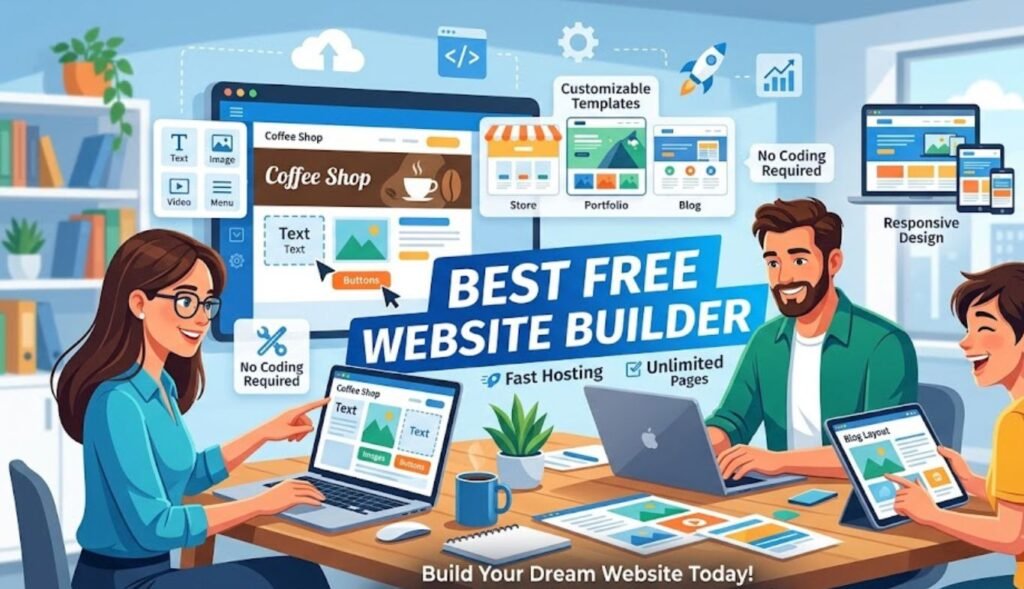
Best Free Website Builder
Creating a professional website no longer requires coding knowledge or a large budget. Thanks to modern website creation platforms, almost anyone can launch a personal blog, business website, portfolio, or online store in just a few hours.
Choosing the best free website builder can save both time and money while giving you access to professional templates, drag-and-drop editing, responsive layouts, and useful SEO tools. Whether you’re starting a side business, showcasing your portfolio, or building a community website, today’s free website builders offer far more features than they did just a few years ago.
Many beginners worry that free builders are too limited. While premium plans unlock advanced features, most free plans provide enough functionality to create an attractive and functional website.
Throughout this guide, you’ll learn how free website builders work, what features matter most, and which platforms are worth considering in 2026.
What Is a Free Website Builder?
A free website builder is an online platform that lets users design, customize, and publish websites without writing code. Instead of hiring developers or learning programming languages such as HTML, CSS, and JavaScript, users simply drag and drop elements into place.
Most modern builders include:
- Drag-and-drop editor
- Mobile-friendly templates
- Built-in hosting
- SSL security
- Image galleries
- Contact forms
- Basic SEO tools
- Blogging capabilities
- Analytics integration
These features make it possible for beginners to create professional-looking websites in very little time.
The biggest advantage is accessibility. Students, freelancers, startups, nonprofit organizations, and local businesses can all establish an online presence without making a financial investment upfront.
Many free builders also allow upgrades later. This means you can begin with a free plan and move to a paid subscription only when your website starts attracting more visitors or requires advanced capabilities.
How Website Builders Work
Website builders operate through visual editors.
Instead of typing code, you click buttons, drag images, edit text, and rearrange sections. The builder automatically generates the website behind the scenes.
Typical workflow includes:
- Choose a template.
- Customize colors and fonts.
- Add your logo.
- Upload images.
- Create pages.
- Publish the website.
The process is straightforward enough that many first-time users can complete it in a single afternoon.
Benefits of Using a Free Website Builder
There are several reasons why millions of users choose free builders every year.
No Coding Required
Perhaps the biggest benefit is simplicity. Even complete beginners can create polished websites.
Budget-Friendly
Launching a website traditionally required paying for hosting, themes, and developers. Free builders remove most of these costs.
Fast Setup
Many websites can be published within hours rather than weeks.
Professional Templates
Modern templates look polished and adapt automatically to smartphones, tablets, and desktop computers.
Built-In Security
Most builders include SSL certificates and hosting, reducing maintenance tasks.
Easy Updates
Content can be edited anytime using the visual editor.
Why Free Website Builders Are More Popular Than Ever
Digital transformation has encouraged individuals and businesses alike to establish a strong online presence. As remote work, freelancing, online education, and eCommerce continue to grow, the need for accessible website creation tools has never been greater.
The best free website builder platforms have evolved significantly. They now include AI-assisted design, responsive templates, integrated blogging, and built-in SEO features that were once available only through premium software.
Several factors contribute to their popularity:
- Lower startup costs for new businesses.
- Faster website development.
- Improved user experience.
- Mobile-first templates.
- Cloud-based editing from anywhere.
- Regular security updates managed by the provider.
These improvements allow users to focus on creating valuable content instead of dealing with technical maintenance.
Who Should Use a Free Website Builder?
Free website builders are suitable for many types of users.
Small Businesses
Local companies can create service pages, display contact information, and build credibility without hiring developers.
Bloggers
Writers can publish articles, tutorials, reviews, and personal stories with minimal setup.
Students
Students often use free websites for academic portfolios and projects.
Freelancers
Designers, writers, photographers, and consultants can showcase their work professionally.
Nonprofit Organizations
Charities and community organizations can promote events, collect donations, and share updates at little to no cost.
Hobbyists
Whether you enjoy gardening, photography, travel, or cooking, a free website offers an excellent platform to share your interests.
Advantages Over Traditional Website Development
Traditional website creation often involves multiple services:
| Traditional Development | Free Website Builder |
|---|---|
| Developer required | No coding required |
| Separate hosting | Hosting included |
| Manual updates | Automatic updates |
| Higher cost | Free plan available |
| Longer development | Quick publishing |
| Complex maintenance | Easy management |
For many users, especially beginners, these advantages make website builders the preferred option.
Understanding Free Plan Limitations
Although free builders provide tremendous value, they do come with certain restrictions.
Common limitations include:
- Platform branding
- Limited storage
- Limited bandwidth
- Fewer templates
- Restricted customization
- No custom domain
- Limited eCommerce functionality
These limitations aren’t necessarily disadvantages. Instead, they provide an opportunity to evaluate a platform before investing in a premium plan.
If your website grows over time, upgrading is usually simple and doesn’t require rebuilding your entire site.
Can You Build a Professional Website for Free?
Absolutely.
Many freelancers and small organizations begin with free plans before expanding.
The quality of your website depends less on the platform and more on:
- Good content
- Clear navigation
- Professional images
- Fast loading pages
- Consistent branding
- Helpful information
- Strong calls to action
When combined with thoughtful design and regular updates, even a free website can appear highly professional and trustworthy.
How to Choose the Best Free Website Builder
Selecting the best free website builder depends on your goals rather than simply choosing the platform with the most features. A blogger, photographer, local business owner, and online seller all have different needs. Understanding those needs before building your site will help you choose a platform that can grow with you.
When comparing website builders, pay close attention to ease of use. A clean drag-and-drop editor allows you to customize pages without learning HTML or CSS. Beginners often appreciate platforms with guided setup processes and AI-powered design assistants that make website creation even faster.
Another important consideration is the availability of responsive templates. Since a large percentage of visitors browse on smartphones and tablets, your website should automatically adapt to different screen sizes. A responsive design also improves user experience and contributes to better search engine rankings.
Storage and bandwidth matter as well. Free plans usually include limited resources, but they are often enough for personal blogs, portfolios, and small business websites. If you expect heavy traffic or plan to upload many images and videos, check whether upgrading to a paid plan is affordable.
SEO capabilities are equally important. Look for a website builder that allows you to edit page titles, meta descriptions, image alt text, and URLs. These features help search engines understand your content and improve your chances of ranking higher.
Finally, consider customer support and documentation. Helpful tutorials, knowledge bases, and active communities can save valuable time when you encounter technical issues.
Essential Features Every Website Builder Should Include
The best free website builder should provide more than just attractive templates. It should include practical tools that make website management simple and efficient.
Drag-and-Drop Editor
Visual editing allows users to design pages without coding. You simply drag elements into place, making website creation fast and intuitive.
Mobile Responsiveness
A responsive website automatically adjusts to smartphones, tablets, and desktops. This ensures visitors enjoy a consistent experience regardless of the device they use.
Built-In Hosting
Many free website builders include secure hosting, eliminating the need to purchase separate hosting services.
SSL Security
SSL certificates protect user data and display the familiar padlock icon in web browsers. They also contribute to better search engine trust.
SEO Tools
Essential SEO features include customizable titles, descriptions, headings, image optimization, and sitemap generation.
Blogging Features
If you plan to publish articles regularly, your website builder should support categories, tags, comments, and scheduled publishing.
App Integrations
Many builders connect with email marketing tools, social media platforms, analytics services, and customer relationship management software.
AI Website Creation
Several modern builders now use artificial intelligence to recommend layouts, generate content ideas, and simplify the design process.
Best Free Website Builder Platforms Compared
Below are some of the most popular platforms available today. Each offers unique strengths, making them suitable for different types of users.
Wix
Wix consistently ranks among the leading choices for beginners because of its intuitive drag-and-drop editor and large template library.
Advantages
- Hundreds of professionally designed templates
- AI website creation tools
- Extensive App Market
- Beginner-friendly interface
- Strong blogging features
Limitations
- Free plan displays Wix branding
- Custom domain requires a paid plan
Wix is ideal for freelancers, small businesses, bloggers, and personal websites.
WordPress.com
WordPress.com offers an excellent starting point for users who plan to grow their websites over time.
Advantages
- Powerful blogging platform
- Excellent content management
- Strong SEO capabilities
- Large community support
- Easy upgrades
Limitations
- Some advanced customization requires premium plans
- Fewer design freedoms on the free version
WordPress.com works especially well for bloggers, writers, educators, and news websites.
Weebly
Weebly remains a reliable solution for users seeking simplicity.
Advantages
- Easy drag-and-drop editor
- Basic eCommerce support
- Responsive templates
- Good learning resources
Limitations
- Smaller template collection
- Limited advanced customization
Weebly is suitable for portfolios, small businesses, and beginner websites.
Google Sites
Google Sites emphasizes simplicity rather than advanced customization.
Advantages
- Completely free
- Excellent Google Workspace integration
- Collaborative editing
- Very easy to learn
Limitations
- Basic design options
- Limited SEO customization
- Fewer templates
Google Sites is ideal for internal business portals, school projects, and team websites.
Webflow
Webflow offers significantly more design flexibility than many competitors.
Advantages
- Professional-level customization
- Responsive visual editor
- Advanced animations
- Clean code generation
Limitations
- Steeper learning curve
- Some advanced features require paid plans
Webflow is an excellent choice for designers, agencies, and experienced creators.
SITE123
SITE123 focuses on speed and ease of use.
Advantages
- Fast setup
- Guided website creation
- Responsive templates
- Beginner-friendly dashboard
Limitations
- Limited creative freedom
- Smaller feature set
SITE123 works well for personal websites and local businesses.
Canva Websites
Canva has expanded beyond graphic design by offering simple website creation.
Advantages
- Beautiful visual layouts
- Easy integration with Canva designs
- Quick publishing
- Beginner friendly
Limitations
- Limited advanced functionality
- Basic SEO options
Canva Websites are best suited for portfolios, event pages, resumes, and landing pages.
Quick Comparison Table
| Website Builder | Best For | Free Plan | Ease of Use | SEO Features |
|---|---|---|---|---|
| Wix | Beginners | Yes | Excellent | Very Good |
| WordPress.com | Bloggers | Yes | Very Good | Excellent |
| Weebly | Small Business | Yes | Excellent | Good |
| Google Sites | Teams | Yes | Excellent | Basic |
| Webflow | Designers | Yes | Moderate | Excellent |
| SITE123 | Beginners | Yes | Excellent | Good |
| Canva Websites | Portfolios | Yes | Excellent | Basic |
Free Website Builder vs Paid Website Builder
Many users wonder whether upgrading is worth the investment. The answer depends on your goals.
| Feature | Free Plan | Paid Plan |
|---|---|---|
| Website Hosting | Included | Included |
| SSL Certificate | Included | Included |
| Custom Domain | Usually No | Yes |
| Platform Branding | Yes | Removed |
| Storage | Limited | Higher Limits |
| Advanced SEO | Basic | Advanced |
| eCommerce | Limited | Full Features |
| Customer Support | Standard | Priority |
For personal projects, the free version is often sufficient. Businesses planning to generate leads or sell products should eventually consider a premium subscription.
Which Website Builder Is Best for Beginners?
If you’re creating your first website, simplicity should be your top priority. The best free website builder for beginners is one that minimizes technical complexity while providing enough flexibility to build a professional-looking site.
Beginners should look for these qualities:
- Easy navigation
- Ready-made templates
- Visual editing
- Helpful tutorials
- Automatic updates
- Mobile optimization
- Basic SEO settings
Among the platforms discussed, Wix, SITE123, and Weebly stand out for their ease of use. They guide users through the setup process and require little to no technical knowledge.
For users focused on blogging, WordPress.com remains one of the strongest long-term options because of its excellent content management system and scalability.
The right choice ultimately depends on your website’s purpose, but any of these builders can help you establish a strong online presence without a large financial investment.
Best Free Website Builder for Small Businesses
Small businesses often have limited budgets, making a free website builder an excellent starting point. A professional website helps build trust, showcase products or services, and make it easier for customers to get in touch.
When selecting the best free website builder for a business, consider these factors:
- Easy-to-customize templates
- Contact forms
- Google Maps integration
- Mobile-friendly design
- SEO settings
- Fast loading speed
- Secure hosting
- Upgrade options
A local service provider may only need a homepage, an about page, a services page, and a contact page. A freelancer may also benefit from a portfolio and client testimonials. Choosing a builder that allows future expansion means you won’t have to rebuild your website as your business grows.
Common Mistakes to Avoid
Even the best free website builder cannot guarantee success if your website contains common mistakes. Avoiding these issues will improve both user experience and search engine performance.
Choosing the Wrong Platform
Many people pick a website builder based solely on popularity. Instead, select one that aligns with your specific goals, whether it’s blogging, business, or eCommerce.
Ignoring Mobile Users
Most visitors browse on mobile devices. Always preview your website on different screen sizes before publishing.
Overloading Pages
Too many animations, images, or widgets can slow down your site. Keep your layout clean and organized.
Poor Navigation
Visitors should find important information quickly. Use simple menus and clear page titles.
Weak Content
A visually appealing website still needs useful, well-written content. Focus on answering visitors’ questions and providing value.
Forgetting SEO Basics
Optimize page titles, headings, image alt text, and URLs to help search engines understand your content.
Not Updating Your Website
Regular updates show visitors that your website is active and trustworthy. Refresh content, images, and contact details as needed.
Website Design Tips for Better Results
Good design enhances usability and encourages visitors to stay longer.
Keep the Layout Simple
Avoid clutter. Use whitespace effectively to improve readability.
Choose Readable Fonts
Select fonts that are easy to read across all devices.
Maintain Consistent Branding
Use consistent colors, typography, and logos throughout your website.
Use High-Quality Images
Professional images create a stronger first impression than low-resolution graphics.
Add Clear Calls to Action
Guide visitors with buttons such as “Contact Us,” “Learn More,” or “Get Started.”
Improve Page Speed
Compress images and avoid unnecessary plugins or large media files.
Make Contact Information Easy to Find
Display your phone number, email address, and contact form prominently.
SEO Tips for Free Website Builders
Building a beautiful website is only the first step. Search engine optimization helps potential visitors discover your content.
Use Relevant Keywords
Include the best free website builder keyword naturally in headings, introductions, and throughout the article without overusing it.
Write Unique Meta Descriptions
Each page should have a concise and engaging meta description that encourages clicks.
Optimize Images
Rename image files with descriptive names and add alt text for accessibility and SEO.
Publish Helpful Content
Create articles that solve real problems and answer common questions in your niche.
Improve Internal Linking
Connect related pages so visitors and search engines can navigate your website more effectively.
Focus on User Experience
Fast loading times, mobile responsiveness, and intuitive navigation contribute to better rankings.
Monitor Performance
Use analytics and search performance tools to understand how visitors interact with your website and identify areas for improvement.
For more information about website optimization and SEO best practices, visit the official documentation from Google Search Central:
https://developers.google.com/search/docs
Frequently Asked Questions
1. What is the best free website builder for beginners?
Wix, SITE123, and Weebly are excellent choices for beginners because they offer intuitive drag-and-drop editors, responsive templates, and straightforward setup processes.
2. Can I create a professional website for free?
Yes. Most free website builders allow you to build a professional-looking website with hosting, SSL security, and customizable templates. However, free plans often include platform branding and limited storage.
3. Are free website builders good for SEO?
Many modern website builders include basic SEO tools such as editable page titles, meta descriptions, image alt text, and clean URLs. These features can help improve your website’s visibility in search results.
4. Which website builder is best for blogging?
WordPress.com is widely recognized for its powerful blogging capabilities, flexible content management, and long-term scalability.
5. Can I sell products using a free website builder?
Some builders provide limited eCommerce features on their free plans. If your online store grows, upgrading to a paid plan usually unlocks advanced selling tools, payment processing, and inventory management.
6. Should I upgrade from a free plan?
If you need a custom domain, additional storage, advanced SEO tools, or enhanced business features, upgrading to a premium plan is a worthwhile investment.
Conclusion
Finding the best free website builder depends on your goals, technical experience, and future plans. Fortunately, today’s free platforms make it easier than ever to create attractive, responsive, and functional websites without writing code.
Whether you’re launching a blog, showcasing a portfolio, promoting a local business, or starting an online project, there is a free website builder that fits your needs. Platforms such as Wix, WordPress.com, Weebly, Google Sites, Webflow, SITE123, and Canva Websites each offer unique strengths, allowing users to build an online presence with minimal investment.
As your website grows, you can upgrade to premium features, connect a custom domain, and expand your site’s functionality. Until then, a free website builder provides an excellent opportunity to learn, experiment, and establish your digital presence.
The key to long-term success is not just choosing the right platform but also creating valuable content, maintaining a user-friendly design, and following SEO best practices consistently. With the right approach, your website can attract visitors, build credibility, and support your personal or business goals for years to come.