Explore All Ukulele Types, Sizes, Brands & Essential Accessories
The ukulele is a small, versatile string instrument that originated in Hawaii and has become popular worldwide for its cheerful sound and easy learning curve. Whether you’re a complete beginner or an experienced musician looking for a compact instrument, the ukulele offers something for everyone.
In this guide, you’ll learn about different ukulele types, sizes, trusted brands, and must-have accessories. By the end, you’ll have a clear understanding of how to choose the right ukulele and gear for your needs.
Ukulele Types
Ukuleles come in several types, each with unique characteristics in tone, size, and playability. Understanding these differences is key to making the right choice.
- Different types produce different sound tones (bright vs deep)
- Size impacts comfort and finger placement
- Some are better suited for beginners, others for advanced players
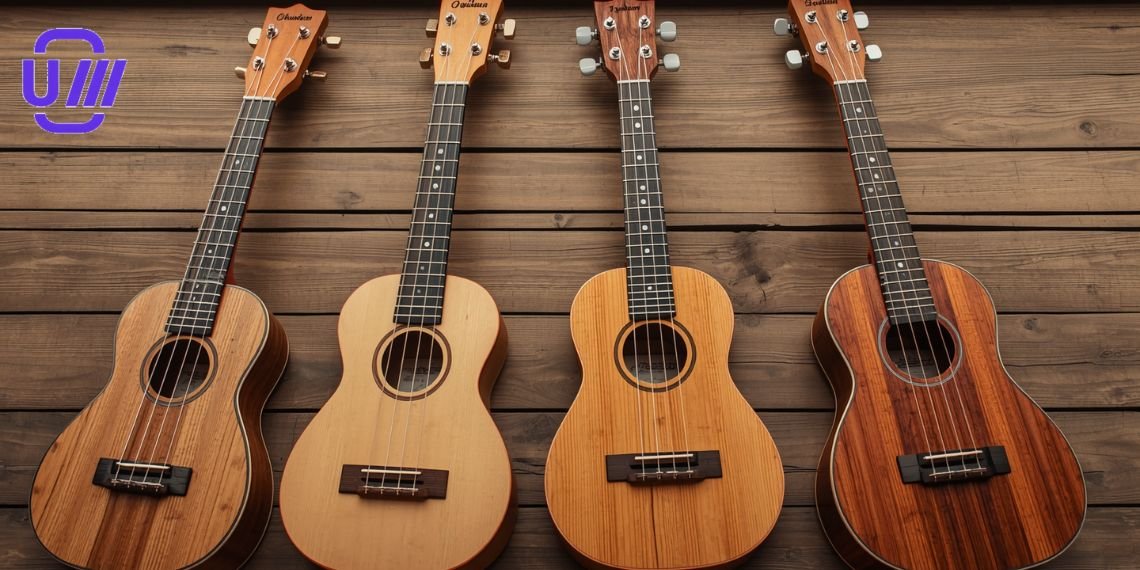
Soprano Ukulele
The soprano ukulele is the smallest and most traditional type. It is often what people imagine when they think of a ukulele.
- Size: Around 21 inches
- Sound: Bright, light, and classic “Hawaiian” tone
- Frets: Typically 12–15
This type is ideal for beginners due to its affordability and simplicity. However, players with larger hands may find it slightly cramped.
Tenor Ukulele
The tenor ukulele is larger than soprano and concert sizes, offering more room and a richer sound.
- Size: Around 26 inches
- Sound: Fuller, deeper, and louder
- Frets: Usually 17–19
It is popular among intermediate and professional players because it allows more advanced techniques like fingerpicking and solo playing.
Baritone Ukulele
The baritone ukulele is the largest standard ukulele and has a unique tuning compared to others.
- Size: Around 30 inches
- Sound: Deep and warm, similar to a guitar
- Tuning: D-G-B-E (same as the top four guitar strings)
This makes it an excellent option for guitar players transitioning to the ukulele.
Ukulele Sizes
Ukulele sizes affect both sound quality and playing comfort. The four main sizes are:
- Soprano – Smallest, bright tone, best for beginners
- Concert – Slightly larger, balanced tone, more fret space
- Tenor – Rich sound, ideal for advanced techniques
- Baritone – Deep tone, guitar-like experience
Choosing the right size depends on your hand size, skill level, and the type of sound you prefer.
Ukulele Brands
Not all ukuleles are made equal. A good brand ensures better sound quality, durability, and tuning stability.
- Look for quality wood construction
- Check tuning pegs and string quality
- Read reviews and compare models
Good Ukulele Brands
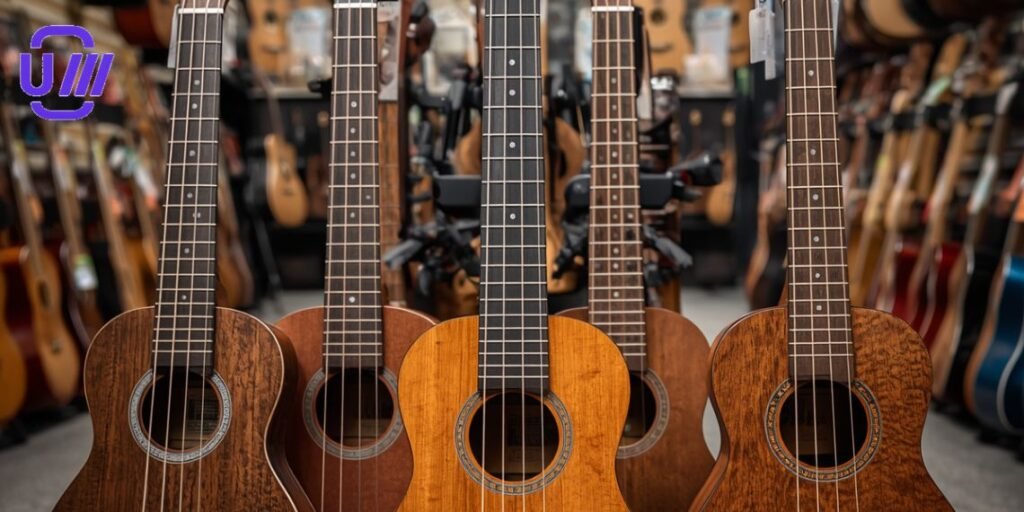
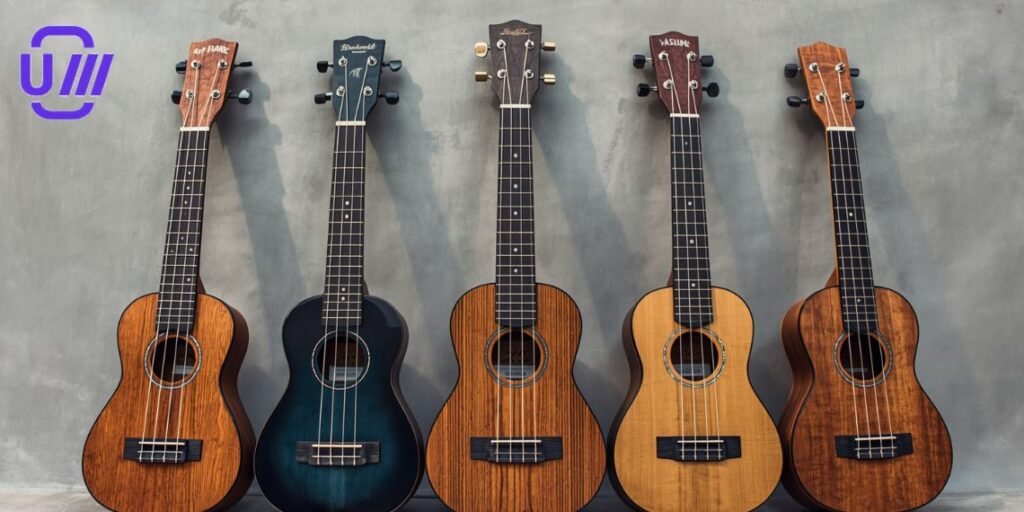
Here are some well-known and reliable ukulele brands:
Beginner-Friendly Brands
- Kala
- Donner
- Mahalo
Mid-Range Brands
- Cordoba
- Oscar Schmidt
Premium Brands
- Martin
- Lanikai
These brands are known for producing consistent quality instruments across different price ranges.
Electric Ukulele
An electric ukulele (also called electro-acoustic) comes with built-in pickups that allow you to connect it to an amplifier.
- Great for live performances
- Can be used for recording
- Often includes volume and tone controls
If you plan to perform on stage or record music, an electric ukulele is a great investment.
Bass Ukulele
The bass ukulele is a unique variation designed to produce low bass tones.
- Larger body and thicker strings
- Deep, punchy sound
- Often used in bands as a bass substitute
It’s ideal for musicians who want a compact alternative to a traditional bass guitar.
Ukulele Accessories
Ukulele Strap
A strap helps you hold the ukulele comfortably while playing, especially when standing.
- Types: Button straps and hook straps
- Provides stability and reduces strain
- Useful for beginners and performers
Ukulele Capo
A capo is a small device placed on the neck of the ukulele to change the pitch.
- Raises the key without changing chord shapes
- Makes playing certain songs easier
- Useful for singers to match vocal range
Ukulele Strings
Strings play a major role in the sound and feel of your ukulele.
- Nylon Strings – Soft and warm tone (common for beginners)
- Fluorocarbon Strings – Brighter and louder
- Wound Strings – Used for lower tones (especially in baritone or bass ukuleles)
Regularly changing strings ensures better sound quality and playability.
Conclusion
Choosing the right ukulele depends on your personal preferences, skill level, and budget. Beginners often start with a soprano or concert ukulele, while more experienced players may prefer tenor or baritone models.
Focus on selecting a reliable brand, the right size, and essential accessories like a strap and quality strings. With the right setup, you’ll enjoy learning and playing the ukulele even more.
Now that you understand the basics, you’re ready to pick your perfect ukulele and start making music!